The problem
Music ideas lose momentum when harmonic exploration, playable voicings, audio preview, and export are split across disconnected tools. A generated answer is not enough; the material has to fit a musician’s working process.
Selected work / 07
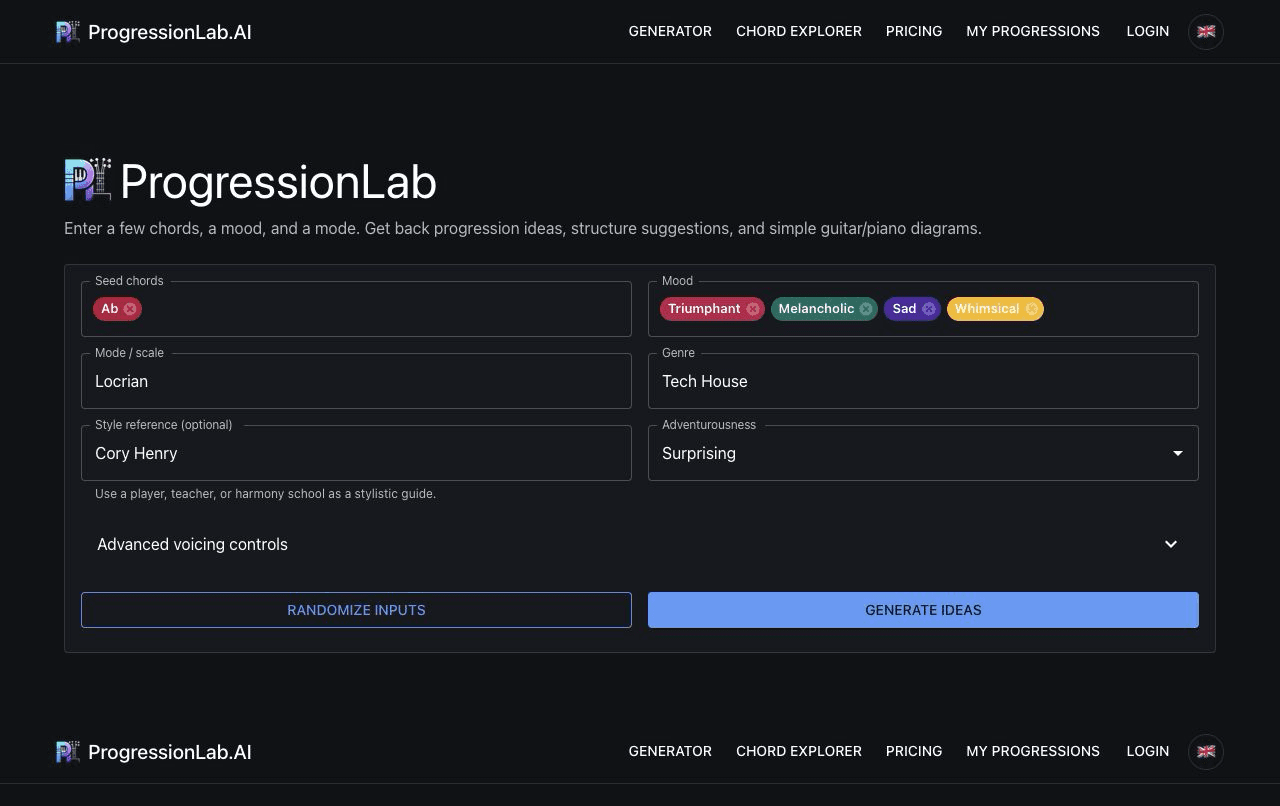
An AI-assisted harmony and songwriting workspace that turns musical intent into playable chord progressions, practical voicings, visual explanations, and exportable session material.
Case study
The problem
Music ideas lose momentum when harmonic exploration, playable voicings, audio preview, and export are split across disconnected tools. A generated answer is not enough; the material has to fit a musician’s working process.
What I built
I designed and built a deployed browser product that joins structured AI generation, music-theory logic, tempo-aware playback, piano and guitar diagrams, progression management, public sharing, and MIDI and PDF export. I also built a separate operational surface for prompts, marketing content, translations, analytics, entitlements, and security controls.
Key decisions
Strict JSON schemas and deterministic voicing normalization turn generated responses into typed chord, progression, and arrangement data the interface can reliably use.
Tone.js playback, visual voicings, diagrams, and MIDI-aware exploration keep the experience grounded in sound and performance rather than text alone.
Prompt versioning, entitlements, marketing draft and rollback workflows, human-reviewed translation, analytics, WebAuthn, and a separate admin deployment make the product operable beyond one demo flow.
Inside the work / 03 views
The product connects musical intent to structured suggestions, playable voicings, audible previews, reusable examples, public sharing, and session-ready exports.
A generated idea becomes inspectable product data with rationale, tension and confidence cues, practical voicings, playback, and export controls.
Curated starting points and filters help musicians continue from a useful progression instead of beginning with an empty prompt every time.
Technical view
Musician-facing tools share one typed application boundary, while persistence, prompts, access policy, and operational controls remain behind server-owned interfaces.
Built so far
Where it stands
Continue exploring
Geospatial / SAR evidence systems
Public portfolio demonstration
Open case study